Hope
Trigger Warning: Drug Use/Addiction
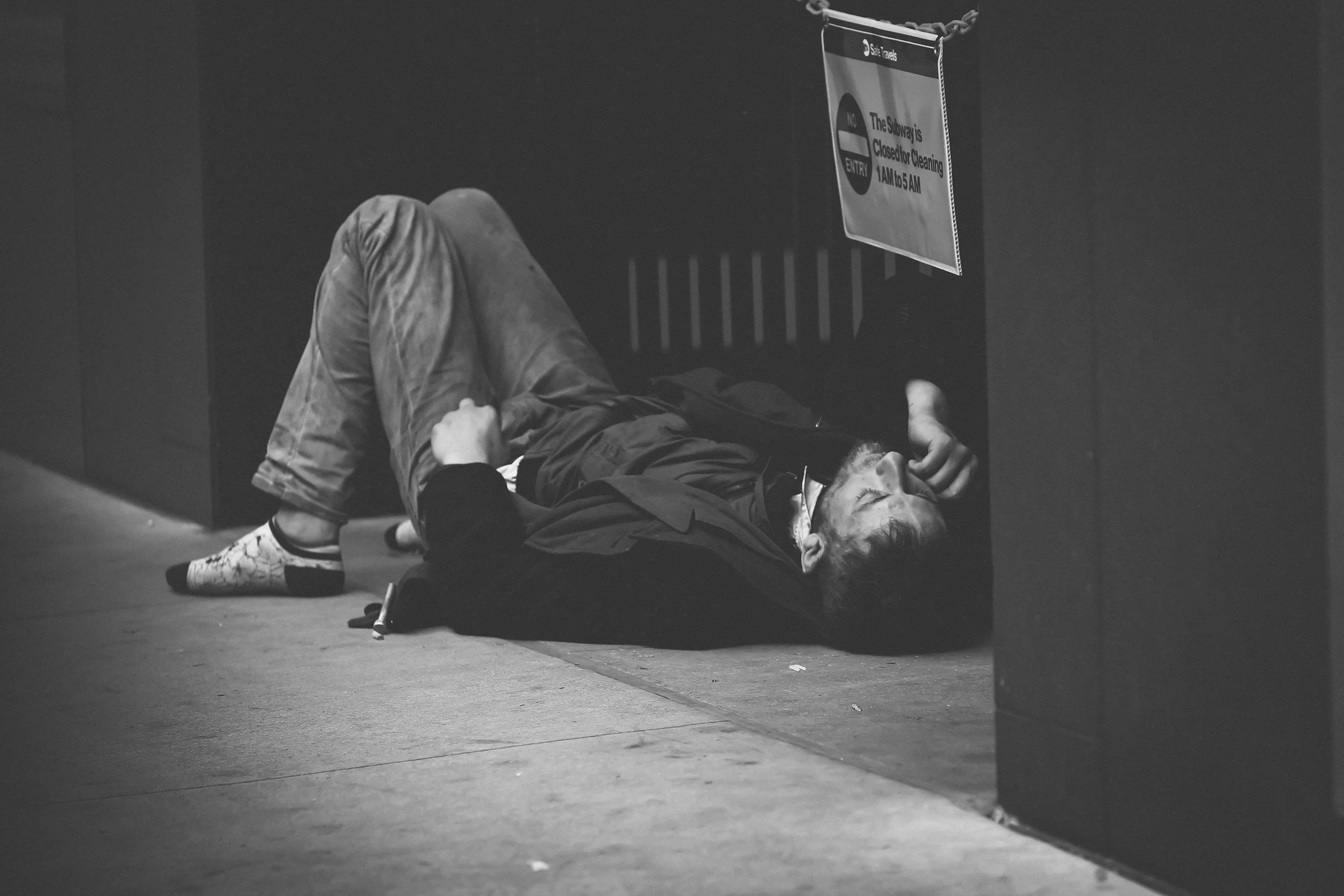
Pretty sure my name’s Kirby Walsh.
I break into this diner in Kensington, in Philadelphia. Close to K&A, where the strung-out linger in shadows, and the girls sell themselves for a fix.
This diner’s owned by an old friend named Josh Bean. He’s been pissed off at me for a while and we ain’t talking, but if I’m stupid enough to get caught, he ain’t going to sic the cops on me, neither. At least I hope not.
I disarm the security setup (this isn’t my first time breaking into Josh’s joint) and then stand in the dark until the specks — the stove lights that don’t go out and the ones that show that the freezers still work and, yep, those on the disabled alarm system, too — gradually give my vision some juice.
I can see a tarp in the back sectioning off the construction area where Josh wants to expand. I already knew about that. That’s where I creep to. I push the tarp aside and right there sits a new booth with seating that’s big enough for me to stretch out on and sleep.
First, though, I got to eat. I pick the lock on the fridges and gouge on donuts and lunchmeat. Eating like a caveman, stuffing my mouth with two hands, sometimes pinching a finger by accident, and then washing the food down by putting my head under the spicket and letting the water run in until I nearly gag. Once again, I’m surprised by just how hungry I am. Well, food isn’t at the top of a junkie’s list.
After I relock everything, so it looks like how I found it, I head back to the hidden booth. I’m already feeling the withdrawal sneaking its way through my veins. My sleep’s fitful.
Finally, I hear Josh come in and then some of the waitresses and the cook. The show lights go on — open for business! — and I wonder when the construction crew might arrive because that’ll be when I’m found out if I’m still here. There’s got to be a way to avoid that. I am plotting my escape, when I hear Josh lead two women to the booth on the other side of the tarp.
I am sweating. If he pulls the tarp back, he finds me. What’s he doing seating people? He doesn’t do that. Isn’t the girl at the cash register in yet?
Josh says, “Well, ladies, best of luck to you today.”
“You’re a good man, Josh Bean,” the younger one says. “A true friend of Sullivan’s.”
“Maybe.” I picture Josh shrugging.
“A good friend is like a four-leaf clover,” the older one says. She’s got an Irish accent, but not so thick that I can’t make out what she says.
They talk about nothing special for what seems like forever (but probably it’s only a few minutes), until finally, Josh says, “Fiona, Gloria: Take care,” and off he goes, thank God.
I get this much from their yakking. Fiona’s the older; the grandmother. Gloria’s the younger; the granddaughter.
When the waitress comes, they order and then they’re quiet.
Finally, Gloria says, “Well, another year, Grandma.”
“Not just another year, this is the year, Gloria. The. Year. Ah, sure, we’ll be grand. I just know it.”
Gloria sighs.
“You know it, eh? OK. Well, Grandma, I hope and I pray that that’s true. I hope and I pray, and I never forget and. . .”
“Your cuppa’s getting cold, sweetie.”
Then I overhear everything throughout their breakfast, and I mean everything. When they hard-stop a few times, I know that the waitress comes again. Fiona: two eggs over easy, sausage, and tomatoes. Gloria: a cheese omelet.
They’re hoping to find this particular guy, one of their family — this Sullivan Devine, who’s a junkie, like me — after so many years he’s been gone and this diner’s the last place that he’d been seen. Good luck with that, I’m thinking.
Dude probably pissed off the wrong dealer at the wrong time and it’s as if the dude never existed. But maybe I’m wrong. Maybe he lives. Doesn’t matter. If he’s not dead he’s as good as. An addict who don’t want to be found by family or friends won’t get found.
And the cops? They don’t put much oomph into finding and arresting them, because the junkies will be back on the street in a minute. Now dealers? Maybe more effort. I got nabbed once a few years ago flipping grass and did six months in prison. Never again.
These two women whisper about shit even though nobody else is around.
“Do you need any help, Grandma?” Gloria asks. I’m thinking she means the sort of help some families still give to their oldsters — like cleaning for them, taking them to church, bringing them food; very old-school stuff — but turns out Gloria’s talking about financial help.
“Oh, I’ve have a few bob put by, sweetie,” Fiona says.
More than a few. Granny got lots of money in the bank. Got money to give to her family when she kicks it. And guess what? Turns out this old lady doesn’t keep everything in the bank.
“Got a bit of dosh put away secret,” says Fiona. A “bit” of dosh, my ass. Woman’s got fifty thousand dollars stashed in a portable home safe. One of them little box-like things with a handle that you can just snatch on the fly. Fifty thousand dollars! In cash!
Now that’s the news I can use.
At some point, Gloria says, “Even if Sullivan’s alive, he won’t ever find me. I moved.”
Fiona says, “Well, I didn’t. I’m planted in the same flat for decades.” She then spills her address in Cheltenham, a town in the burbs right outside of Philadelphia. Describes the duplex she lives in that had been converted into four different apartment units.
Describes her neighbors as people who “keep to themselves.” They’re all older than dirt like her. Dinner at four, to bed by eight. Sometimes they’ll sleep in and get up by, say, five.
I mean, this information is just being ladled out to me. I get all I need. The conversation gets sketchy at one point. Fiona keeps saying “don’t let hope be taken from us,”; looping it, until eventually Gloria says, “Go ahead, Grandma, hit me with the G.K. Chesterton quote yet again.”
“Cheeky.”
“Grandma, I’m just tired.”
“Everybody’s tired.”
Pause. Some sniffling.
“I’ll never get over it,” Gloria says. “My own beautiful boy.”
“Musha. Musha.”
“But I do like the quote, Grandma. I just can never remember it.”
“Hmm. You know, Gloria, seems like I forget it, too.”
“You?”
“Yes. I do forget things sometimes. I’m 92, after all.”
Fiona don’t forget shit. Doesn’t matter she’s that old. She’s just pissed off.
Quiet again.
“Here it is,” Gloria says. Clears her throat. “G.K. Chesterton. He said, ‘Hope means hoping when things are hopeless, or it is no virtue at all. . .’”
“Very good, but I hate them contraptions,” Fiona says. “Destroying society.”
“But you got a mobile, Grandma.”
“For use only in emergencies, dear.”
“But. . .” Gloria starts to argue, then shifts gears, and simply says, “Hope.”
“Yes, hope. Keep that in mind, Gloria. Hope.”
About a half hour after Fiona and Gloria leave, I try to look for a door or window or something back behind the tarp where I can get the hell out. I trip over some workmen stuff.
Clang! Clang! Clang! Clang!
Josh appears like he’s been waiting for me. I mean, why’s he even back here?
“You! Again! Get the hell out of my establishment! Now! You’ll never change. But here’s one change: You ain’t ever gonna steal from me again. I knew it was you who broke in last night.”
I plead and make excuses but that don’t work and he’s got me by the collar, drags me through the diner. Some customers laugh at this and even more laugh when he throws me the hell out the door like I’m a bag of trash.
Some friend. Well, the joke’s on you, Josh Bean, because I copped your SEPTA transit card. Luckily, it’s one of those that don’t come with a photo. I’m white. Josh is Black. So, for today, at least until he finds out and reports it lost or stolen, I can ride for free.
Thanks, Josh!
I hop on the subway and get off at the Fern Rock station and then catch the 28 bus. In about an hour and a half, I’m in Cheltenham, and I go to a Wawa and buy some Gatorade and chocolate-chocolate chip ice cream and aspirin to try to slow the crash.
But only one thing guaranteed to get a junkie feeling better: More of the same that turns him into a junkie in the first place. That, or maybe meth or bupe, but they don’t always stick. Bupe didn’t stick with me, anyway, and I ride the horse soon as I get out of prison.
I find where Fiona lives and camp out behind a dumpster in a closed gas station lot across the street. Sign says they’re building something or other there soon. Hiding because I stick out in upscaley Cheltenham. The town borders Philly’s 35th police district, which might as well be the Wild West and Cheltenham cops always watch out for criminal critters who wander over the border looking to expand their horizons, as you might say. So, I’ve got a lot of time to think, and that’s usually a bad thing.
There’s always that question: How in hell did this happen? No kid dreams of one day growing up and becoming an addict. It’s mainly horse, now, but I’ve snorted, smoked, ingested, and injected just about anything I could get my hands on. I should be dead.
I thought, “I can handle it.” Every addict or drunk says that until they realize that they can’t and then it’s too late.
So, here I am feeling sorry for myself, sitting behind a dumpster in Cheltenham. Night comes and it’s getting colder, but I’m sort of immune to the elements. Though I do have, or had, friends who froze to death in winter or died of dehydration in summer because they’d been too high or dopesick to come in from the cold or to remember to drink water.
I’ve been staking out Fiona’s apartment all day and into the night and finally see Gloria leave. The lights in Fiona’s place go out. Do I really want to do this?
Do I really have a choice?
I walk across the street as if I’m the mayor and I don’t even have to jimmy the door because turns out that Fiona must have forgotten to lock up when Gloria left.
So, I’m in. I hear my heart — thumpity! thumpity! thumpity! — and wish that it would settle the hell down. Scared that it might give me away. I try to control my breathing, but then I think I might be breathing too loud. I take one step into the living room as if I’m in a minefield.
Then, I’m caught.
The lights don’t just flick on, they pop! like little floodlights, and I’m like, “Oh, shit.”
And there’s the old lady, Fiona, standing in the hallway back by, I guess, her bedroom. Standing there like she been waiting for me.
It’s late for a 92-year-old to be awake. I should have known, though, that she’d never quit just by the way she talked this morning. All that jazz about hope.
Now, she keeps her balance with a hand and forearm flat against the wall. She stares at me. Weird look. Might be a smile. Can’t tell.
I’m about to ghost when Fiona croaks, “Sullivan! I knew it! I just knew you’d come back to us this very night! I never give up hope! I been waiting!”
Options! Options!
Bolt. Or knock her out. One punch. Or just push her back inside the bedroom, tie her up, gag her. Then real quick find the safe, grab it, and run.
You might accidentally kill her.
Right. So, second thoughts: no punching, no tying up. Just grab and dash. Because all I want? I just want the money. I need that money! It’s not fair that some people get money and I get squat!
Meanwhile, in about three shuffle-steps, Fiona reaches into what must be a closet and pulls out a cane. Shows it to me before spotting it on the floor. She keeps coming. Her slippers and, I guess, it’s her bones, making sounds.
Scratch. Crack. Scratch. Crack. Scratch. Crack.
She says, “Should I call your mam? My phone’s in the the bedroom being charged. Or do you want to surprise her?”
“Surprise her,” I say.
Don’t call nobody, Fiona!
“Sit!” she says.
I can see that she doesn’t wear one of those cop-alerting necklaces and I quick-scope the room but can’t find anything else that she might activate by screaming or clapping or yodeling or whatever the hell else spunky old people do when they need help.
That doesn’t mean she don’t have anything like that hidden, though. They put cameras and all them other doodads any damn place these days. Hell, wouldn’t surprise me if a drone buzzed by. But I am not going back to prison. That ain’t happening to Kirby Walsh.
“Sullivan Devine!” Fiona says. “Our Sully! It’s a miracle!”
I should just bolt. But I’m fierce jonesing. Got the sweats. Trembling. Puked three times today. My bones and muscles hammering to break out my skin.
I need that money. I know where she hides it.
Now, Fiona says, “Take that chair there.”
Can’t she tell that I’m clucking?
“That rocker right there,” she says, not looking at me or at the rocker but looking down, concentrating on walking. “I never use it. Too hard on my spine.”
She turns to me and then plops backwards into a lounger, reminding me of. . . like. . . like. . . like how hottie girls at parties fall backward knowing dudes will catch them. She puts her hand on her chest. Breathes. Struggling.
Wheeze! Wheeze! Wheeze!
Her blue nightgown hangs loose and matches eyes that twinkle with the smarts. That would have shocked me if I hadn’t already known that she got all her marbles (and maybe some of yours as well).
Kind face, wrinkles and all. She accepts you no matter what.
Fiona says something that sounds like, “cade me le fall cha!”, raising her arms like she wants a hug. Might be Italian, but this sure as hell ain’t no Italian crib.
I spot right off the Irish stuff I used to see in homes when I was a kid. The Celtic cross and a big picture of the Blessed Mother. There’s even a poster of JFK — talk about old-school Irish-American.
On the mantle, pictures of the family. Guy in uniform in a shot that must have been taken about the time they invented film. Her dead husband, I’m guessing. Lots of kids, too. The biggest picture being of a young dude, with a rosary hanging off the side of the frame. Sullivan, no doubt. The black sheep junkie.
I guess he looks like me to somebody who really wants to see this guy. Like I’m some sort of anime wish-come-true.
I got reddish hair, like Sullivan Devine. Blue eyes. Both of us have what some might call a strong jawline and big-ish ears. I mean, if you dim the light and tilt your view, you just might see a resemblance.
Meanwhile, Fiona’s still coughing.
“Sit!” she manages to say on an exhale. “Please sit!”
“Well. . .” I say and then realize I got nothing to say. Why not? See how this rolls.
I plant myself in the rocking chair. . . creak!. . . facing the lounger, gripping the arms to not shake so much.
She points to one of the wall posters. It reads, Céad Míle Fáilte! OK, right. So that’s the “cade me le fall cha,” that she just said.
“Gaelic,” she says. “Means a hundred thousand welcomes!”
She squints.
“You look different, Sullivan.”
Uh-oh.
“Well, of course you do,” she says. “It’s been seven years, four months and 17 days. What can I get you? A cuppa? A pop? How about something to eat? So skinny!”
“I’m fine. . .” I don’t know what to call her; probably not Fiona. What did this Sullivan dude call her?
She says, “Sure? I’m still fit, you know. Mostly. Though the nights, as you can see, they can be a bit rough because that’s when the arthritis devils me.”
I want to bolt, but don’t. Instead, I smile or try to. Don’t know if I’m pulling it off. I gamble.
“I remember that well,” I say.
It can’t be something that she just started doing for kicks last week. It’s probably what she rolls out at family holidays after a few snifters.
She’s smiling, too.
She says, “Look, we’ll get you straight again, Sullivan.”
So, she does notice I’m dopesick.
She says, “The best rehab. Don’t care what it costs. You’re here! You’re alive! It’s a sign! We can do this!”
We.
I’m tempted to deny, deny, deny, but she might call 911 and get me to the emergency room if I do that. I look at the floor.
She changes the subject.
“How did you find me?”
I say, “I can get to your place blindfolded.”
“Happy birthday!” she warbles.
I lean forward.
Creak.
She says, “Thirty-three years old! God bless ye!”
Yeah. Happy birthday, Sullivan Devine.
I feel like I’m going to puke again.
“I never give up,” she says. “You’ve always been a bit of a chancer. Your grandma, my Erin, God bless her soul, she give up. Your Mom — that Gloria! — too. But not me. I knew you’d come back, and I knew it would be today on your thirty-third birthday. The age our Lord was when they crucified him.”
That’s supposed to be a good omen?
“Yeah,” I say, “thirty-three.”
I swipe my brow. Sweat runs down my face. I still don’t know what to call her and she will notice and think it’s strange.
She laughs and then the laugh turns into a choking fit.
I get up.
She holds out her hand.
“Stay,” she says.
“You need water.”
I go to the kitchen, root around for a glass. She’s got one of them. . . What do they call them? Collages? All these pictures in different frames that are joined together in one overall piece and hanging on the wall.
I can see it’s old and with words at the top written in bright green crayon with crooked and inside-out letters, like a little kid would do. Says “My Peeps.” The “y” and the “p” facing the wrong way. Signed: SKD.
Sully did this when he was a dink. Long before he wandered his way, stupid decision after stupid decision, into hell. I read what I need to know.
Interesting.
I find a pitcher of filtered water in the fridge, fill the glass halfway, and bring it to her, placing it on the little serving table next to the lounger.
“I called grandmom Mom-Mom Walsh,” I announce. “You, I called Mom-Mom Kennedy. Or, like you say, when I was a dink, ‘The Great One.’”
Take that!
I add, “And I call Mom, Mom.” Seems like a safe bet.
Fiona now says to me, “We’ll get you better, Sully.”
I say, “I am better, Mom-Mom Kennedy.”
I know I don’t look it, though. Still sweating. Still aching. Still sick.
“My medicine cabinet in the bathroom,” she says. “There’s pill bottles and one without any label stuck around it. Go get it, and please bring it to me.”
I need something a hell of a lot stronger than aspirin, old lady.
But I do as she says. I open the medicine cabinet and about 20 things jump overboard into the sink, clinking, clanging, and causing commotion.
I call, “Sorry!” but of course she don’t hear me. (I think.)
I put the shit back and bring the drugstore thing with no label out to her. I hold it up, shake it, rattling what’s inside as if they’re Tic Tacs.
“For. . .?
It could be a long list of possibilities: diabetes, heart problems, the Big C, arthritis.
“It’s for you, Sully.”
“Ooookay.”
“Look there,” Fiona says. She nods to the bureau. “Bottom drawer.”
I open it. It’s filled with scissors, tape, batteries, pens, notebooks, rags, 8-track cartridges, wires, little light bulbs.
I look at her.
“See black duct tape?”
I pull it out.
“Bring it here, please, Sully.”
I place it on the server right next to the glass of water. Then hold up the pill bottle again.
“How many you take, Mom-Mom?”
“You, Sully, you, should take just one. One an hour until I tell you ‘stop.’”
She is clever, give her that.
I ask, “Meth or bupe?”
“The latter.”
The latter.
I never could figure that one.
“Which?”
“Buprenorphine.”
“I am not. . .” I stop. I can’t convince her that she doesn’t see what she sees: A guy crashing. I pop the pill.
“Now go in the kitchen and bring in one of those straight-back chairs, please. Set it there next to the rocker, please. Facing me, please.”
Strange how the most important moments in your life happen when you’re not looking. I mean, eventually, soon after, or long after, or somewhere in between, you realize.
Decision time.
I can just take all the bupe, find the fifty thousand dollars, and sprint on the hell out of here. Maybe tie her up before all that so that she can’t call the cops.
I don’t do that, though.
Instead, I do as she says. I go into the kitchen, grab a chair, bring it back.
“Sit.”
I do. She tosses the tape onto my lap.
I still do what she says even though I know I’ve got options. Even though I know this might slap me back behind bars. Even though I know that there must be an easier way.
I think of what I learned in high school about Socrates. He didn’t have to drink the poison. Or even Jesus Christ himself. He just needed to speak up for himself to Pilate to avoid it. I’m just a junkie. I ain’t no Socrates and sure as hell ain’t no Jesus or anything like them people.
But I suddenly remember, I do have a life, and no matter what I been through, I still got a chance to do something worth doing with that life. Right?
So, I do what Fiona says. Duct tape my legs to the chair’s, and the same with my left arm, the one that I usually slam the shit into. (But there’s holes all over my body.)
Fiona manages to secure the right arm — her knobby fingers working it — and guess what? It’s the tightest wrap of the four. And then she sits down and tells me a little about herself. Her Irish music of a voice calming me as if I’m listening to one of those lame hypnotist characters in an ancient black-and-white movie saying, “You are getting sleepy. Sleepier.” I’m not anywhere near sleepy; just a bit less jittery.
She grew up Catholic in Northern Ireland but she, her husband, and sully’s grandmother, Erin, then a baby, moved to the United States in 1962 because they saw The Troubles coming. That and an Irish-Catholic movie-star-handsome man leads the most powerful nation in history. A Kennedy, no less.
“But no relation to me, darn it,” Fiona says.
I say, “I’m not him, you know. I came here to rob you. My name’s Kirby Walsh. Just another junkie. I should be back in prison. I know about the fifty thousand dollars.”
“You are in prison, Sullivan. Look at the state of ye! But we are going to get you out.”
We?
“I just told you. I am not Sullivan Devine. Are you crazy?”
I start to tug at the tape but I’m not going anywhere.
“Kirby Walsh was one of your aliases,” Fiona says.
“Old lady, you are crazy! I change my mind! I don’t want to do this! Cut me free!”
But Fiona just stares over my shoulder like she tranced out. Now the calm music of her voice just fires up my pissedoffness. I want to scream for help but where will that lead? I broke into her apartment. Ain’t no help coming for me.
Fiona says, “Back when we had those big family gatherings . . . remember them? That still goes on, dála an scéil.”
“What?”
“Sorry. Means ‘by the way,’ Sully.”
I practically sing: “I am not your great-grandson, you crazy old” — and here’s word that I didn’t know I know — “crone!”
But she doesn’t stop.
“And the game was to take your middle name and pair it with your mother’s maiden name and see what you come up with. Remember?”
“No, I don’t remember because I wasn’t there! Why won’t you believe me?”
“The names we brought out. Like Thomas O’Connell would become Vincent Abato. Remember? Or Teresa McDonnald would become Maria Garcia. Remember?”
“Please!”
“And,” she says, holding up her index finger like she’s making a speech, “Sullivan Devine would become Kirby Walsh.”
Uh-oh.
I feel the mood swings coming on, like what always happens to me in detox. One minute I plead and promise, the next I curse and threaten.
“I am Kirby Walsh, Fiona. That’s my name.”
“That’s just one of the names you used, Sullivan. You fooled a lot of folk, even yourself.”
“You’re holding me against my will.”
“You agreed to this.”
“I change my mind.”
Then I tell her why this can’t work. I’ll have to go to the bathroom. I’ll need to eat. Either she cuts me free, I point out, or I’ll die.
“Do you want that on your hands?”
But she doesn’t listen.
“Your friend, Josh Bean, worked out the plan,” she says.
This shuts me down for a second, her mentioning Josh. How does she even know him?
“What are you talking about, you crazy-ass old lady?”
“He’s a true friend of yours, Sully, Josh Bean. Not like them eejits with their drugs. I must admit that I was skeptical. I’m still shocked that it worked.”
All the while I tug and twist my taped arms. I think I feel a little give with my right arm. There’s hope.
She says, “Because who can really predict what an addict will do in a certain situation? Or anybody, for that matter? But that’s where hope comes in. We hoped that it would work. So much could have gone wrong.”
I laugh. At least it sounds to me like a laugh.
I say, “Yeah, right. So much could have gone wrong. What if something did go wrong? What then?”
“We’d try something else, Sullivan.”
“You’d never find me again. Hiding’s what I do.”
“No need to hide anymore, boyo. What made this work? Grace, Sullivan.”
I see my spittle when I yell, “I am not Sullivan, you crazy old bitch! I want out!”
“Believe in God’s grace,” she says. “It makes miracles. Even for somebody like you, suffering from a double dose of original sin. This here today is a miracle.”
“You’re 92 years old. Do you really, really think you can hold me here? Without any help?”
“Your mam, my granddaughter, Gloria, is on her way.”
“Do you really think you two women can hold me here against my will?”
Then, a voice comes from down the hall.
“No, but the three of us can.”
And in steps Josh Bean. I lose it. I start crying, sobbing even. The kind of meltdown that makes your snot run. He comes over, pats me on the shoulder.
“Josh, please tell her who I am.”
He says, “I thought and thought about it, Sullivan. It’s the acid you dropped. That altered your reality. That is what made you think that you really are Kirby Walsh. It made you forget Sullivan Devine. That’s my theory.”
I look at the far side of the room where I see shadows swaying like a school of fish. All the memories buried by addiction making their way back to me.
“I’ve been in and out of rehab sooooo many times,” I explain. “What makes you think that this time will stick?”
They don’t answer. It’s hope that makes them think that. Hope seems to be the word of the day.
Josh says, “Sullivan buddy, we’re going to get you better. This time rehab works. A new life for Sullivan Devine.”
Calm washes over me because here’s a man about my age. Someone I can maybe reason with. So that’s what I do.
I try to reason with him. Just stating a fact.
“Pretty sure my name’s Kirby Walsh.”

Frank Diamond’s poem, “Labor Day,” was nominated for a Pushcart Prize Award. His short stories have appeared in Helia Lit, RavensPerch, the Examined Life Journal, Lost Lake Folk Opera, Wordrunner eChapbook, Dulcet, Thriller Magazine, the Fredericksburg Literary & Art Review, and Stepping Stones Literary Journal among many other publications. He has had poetry published in many publications. He lives in Langhorne, Pa.