The alchemist
seeks not to change the lead,
but the sight that sees it as lead.
The principle of inner work
Each polished bone of maple
is laid with purpose.
A lattice for the ascent of flame.
Feed the fire
This is the work:
to take what was abandoned
and offer it to the transformative breath.
Let go of regret
By the light of that very consumption,
the vision clarifies— this is not just wood,
but the trestle that holds a world of image and color.
The armature of a former seeing
This is the canvas for the easel,
the altar of a forsaken craft.
Something that transmutes flesh to lines.
Nagarjuna was the first magus
He found the pigment
in the pale skin of a family,
stretched life into art.
The question rises from the embers
If he could crucible his own gift,
could pour the molten ore of his ambitions
into his own annealed self
Would the alloy hold?
The answer is the same as the smoke.
The medium is the raw, chaotic matter
of joy from shared days.
His masterpiece is to be life itself
So he tended the smaller, hotter fire,
performed the only alchemy left:
to burn the structure of an old perception,
And watched the rising air
As it ceased to be an easel,
ceased to be a symbol,
became only heat, and light, and ash.
A shimmer in the heat
Alchemy‘s true work is to see the base metal
and know it was never base.
It was only a step in the great becoming.
The unscrewing of a rusted intention
Note: Nāgārjuna; c. 150 – c. 250 CE was an Indian monk and Buddhist philosopher.
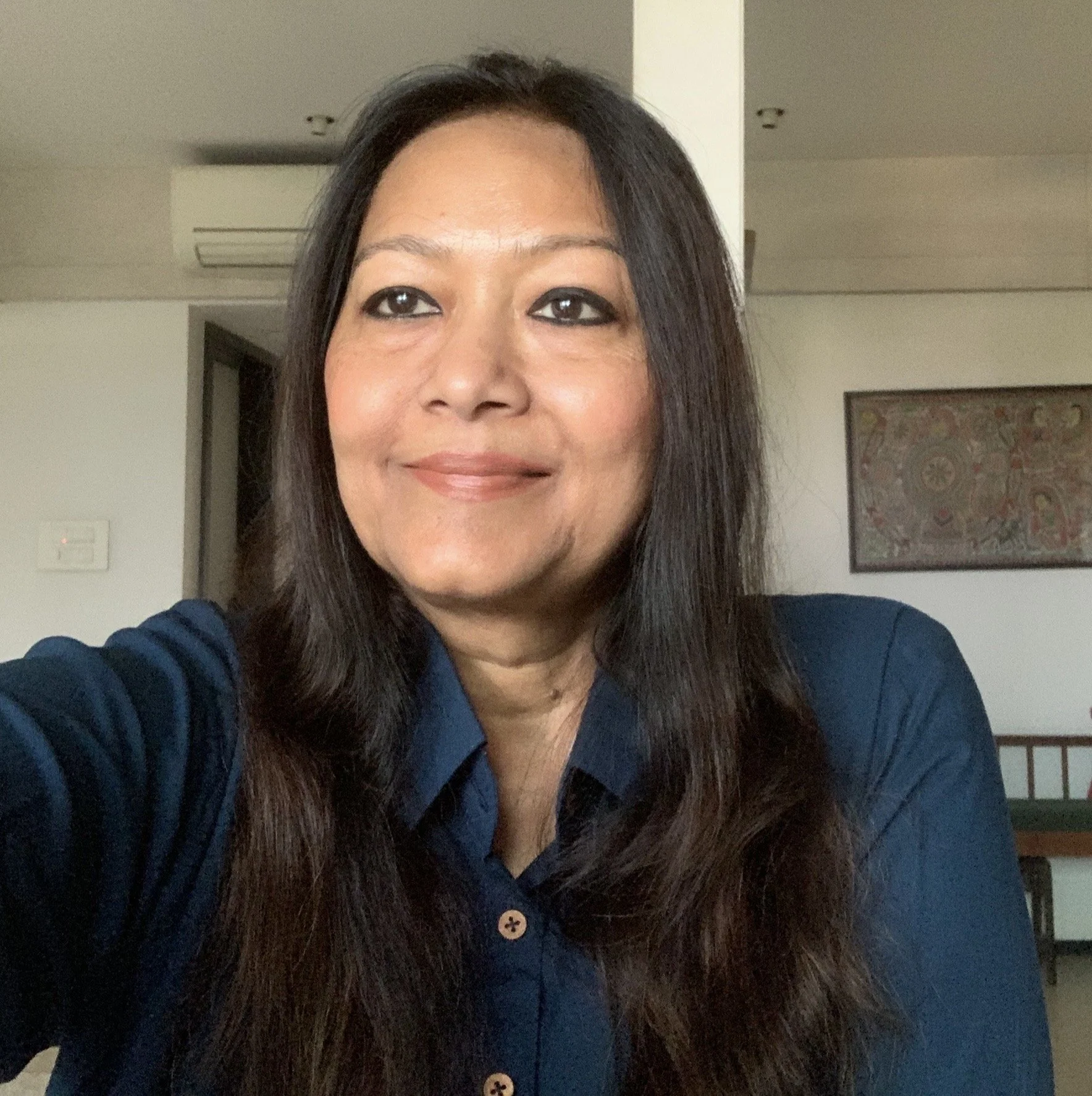
Vinita Agrawal is from Indore, India. She has authored seven books of poetry and edited two international anthologies on climate change. Her work is widely published and awarded.